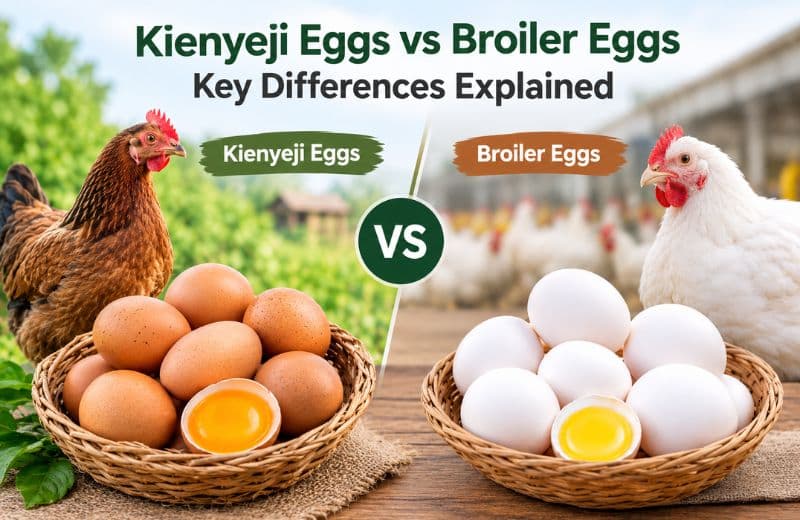
What are Kienyeji Eggs? Broiler Eggs Vs. Kienyeji Eggs
Walk into any Kenyan market, and you will hear people argue about eggs. Some swear by kienyeji eggs for their rich taste and deep yellow yolks. Others buy the cheaper eggs from the supermarket shelf and see no difference.
So what is the difference between pure kienyeji eggs and broiler eggs? Let's go through it properly, from the bird to the breakfast plate.
First, a quick clarification about "broiler eggs"
Broilers are bred for meat. They grow very fast and are usually sold at 5 to 7 weeks old, long before they would lay eggs for eating.
The eggs most people call "broiler eggs" are actually commercial eggs from layer hens, such as Isa Brown or Hy-Line. These hens are bred to lay almost every day, and they are the source of the trays sold in shops and supermarkets.
So when we compare kienyeji eggs vs broiler eggs, we are really comparing eggs from indigenous, free-ranging chickens with eggs from commercially farmed layers. That is the comparison this article makes.
What are kienyeji eggs?
Kienyeji means "of the homestead" in Swahili. Kienyeji chickens are the indigenous birds that roam compounds and farms, scratching the soil for insects, seeds, grass and kitchen scraps.
Today the word also covers improved kienyeji breeds like Kuroiler, Sasso and the KALRO KC lines. These birds still forage, but they lay more eggs than the old local types.
Because they live outdoors and eat a varied diet, their eggs tend to look and taste different from factory farm eggs.
Kienyeji eggs vs broiler eggs: the main differences
Size and shell
Kienyeji eggs are usually smaller and less uniform. You will see shells in cream, light brown or slightly speckled shades. The shell is often thicker.
Commercial eggs are bigger, very even in size and colour, and packed in neat trays.
Yolk colour and taste
This is the difference people notice first. A kienyeji egg often has a deep golden or orange yolk, and many people describe the flavour as richer and more "eggy".
Yolk colour comes from what the hen eats. Greens, insects, and plants rich in carotenoids give darker yolks. Hens fed mostly on commercial feed lay paler yolks.
Nutrition
Both types of eggs are good protein sources and contain vitamins A, D, E and B12, choline, selenium and healthy fats.
Research on pasture-raised and free-range hens suggests their eggs can carry more omega-3 fatty acids, vitamin A and vitamin E, depending on the diet and how much time the birds spend outdoors. The gap is not huge, but it is real, and it grows when hens forage widely.
Cholesterol content is fairly similar in both, so neither is a "bad" egg for the average healthy person.
How many eggs the hens lay
An indigenous kienyeji hen may lay only around 40 to 100 eggs a year, since she stops to brood and raise chicks. Improved kienyeji egg breeds do better.
Commercial layers can produce close to an egg a day for well over a year. This is why commercial eggs are more plentiful and cheaper.
Price
Kienyeji eggs cost more per egg. The hens lay less, take longer to mature, and need space to roam. Commercial eggs are cheaper because of high production and lower cost per egg.
Fertile or unfertilised
Where a rooster runs with the hens, kienyeji eggs can be fertile. They are still safe and nutritious to eat, and you would only see a difference if the egg were incubated. Commercial layers are kept without roosters, so their eggs are unfertilised.
Farming style
Kienyeji hens are raised free-range or semi-free-range with access to soil, sunlight, and natural feed. Commercial layers live in cages or poultry houses and eat formulated feed built for maximum laying.
Which eggs should you choose?
Pick kienyeji eggs if you care about flavour, yolk colour, and eggs from birds that live outdoors. They are lovely boiled, fried sunny side up, or in dishes where the egg is the star.
Pick commercial eggs if you bake in bulk, cook for a large family on a budget, or need consistent size.
Many households do both. They buy commercial eggs for baking and everyday cooking, and kienyeji eggs for breakfast and for children.
How to spot genuine kienyeji eggs
Watch for uneven sizes and shell colours, since real farm eggs are not perfectly matched. Crack one open and check the yolk, which should stand up round and firm with a thick white around it.
Ask the seller how the birds are kept and fed. A trustworthy farmer will happily tell you.
Freshness matters too. Drop an egg in a bowl of water. If it lies flat at the bottom, it is fresh. If it stands up or floats, it is old.
Where to buy kienyeji eggs in Nairobi
If you live in Nairobi and want kienyeji eggs without hunting through markets, Nyumbani Greens delivers them fresh to Kilimani, Kileleshwa, Lavington, Karen, Lang'ata, Westlands and South B.
"Knowledge is the foundation of sustainable progress. By sharing insights and fostering understanding, we create a better future for agriculture and healthy living."