Healthy Travel Food Ideas for Matatu, Bus and SGR Trips
The best healthy travel food for a matatu, bus or SGR trip is something filling, low on mess and safe to eat without a fridge. Think boiled eggs, bananas, groundnuts, boiled arrowroot, githeri and a flask of tea or plain water. Pack small portions that you can eat with one hand or a spoon, and leave out greasy or very sugary foods that sit badly on a bumpy road.
Most of us only think about food once we are already hungry, stuck in traffic at Kikuyu or waiting for the bus to leave a stop. By then, the choices are usually fried snacks, soda, and whatever the hawker is carrying. A little planning the night before gives you better energy, a calmer stomach, and a lighter wallet.
What makes a food good for travel?
Healthy travel food needs to pass a few simple tests.
It should stay safe for several hours without refrigeration. It should be filling enough that you are not hungry again an hour later. It should be easy to eat in a tight seat without crumbs, sauce or smell. And it should be gentle on the stomach, because winding roads and a full breakfast do not always get along.
Foods that combine slow energy from complex carbohydrates, some protein and a little fibre usually do best. They keep your blood sugar steadier than a bun and soda, so you avoid that sleepy crash halfway through the journey.
Matatu trips: pack small, quiet and tidy
A matatu is the most cramped way to travel, and you rarely get a proper food stop. That means your food should be compact, mess-free, and not smelly enough to bother the passenger next to you.
Good matatu snacks include bananas, tangerines, roasted groundnuts, boiled eggs that are already peeled and wrapped, and boiled sweet potato or nduma cut into small pieces. Keep everything in one small bag at your feet so you are not digging through your luggage on the rack.
Avoid soups, saucy stews, and anything that needs a plate. A short matatu ride to town does not need a meal at all. Water and a small snack are enough.
Bus trips: use the stops, but carry your own base
Long-distance buses from Nairobi to Kisumu, Eldoret, Nakuru, Kisii or Mombasa usually make a few stops, often around Naivasha, Mtito Andei or similar towns along the highway. These stops are useful, but they are also where prices go up and fresh options run out.
A smart plan is to carry your own filling food and use the stop only for a hot drink or a restroom break. A small container of githeri, a couple of boiled eggs, a banana and a bottle of water can carry you through most of the trip. If you are travelling overnight, keep it lighter. Heavy meals late at night can leave you uncomfortable in a reclining seat.
SGR trips: light food that suits the Madaraka Express
The SGR between Nairobi Terminus in Syokimau and Mombasa Terminus takes roughly five hours, with a stop at Voi along the way. The seats are more comfortable than a matatu or bus, and there is a trolley service with snacks, tea and hot meals. Even so, many travellers prefer to carry something of their own, because onboard food can be pricey.
Kenya Railways once tried to stop passengers from carrying outside food, but the directive was suspended after public pushback, while alcohol stayed prohibited. One recent traveller review also confirms that food can be taken on board. Rules can change, so check the latest Kenya Railways notice before you travel, and keep your packed food simple and dry enough to pass a security check without trouble.
Good SGR choices are boiled eggs, bananas, groundnuts, a small tub of cooked beans, chapati and a flask of lemongrass or ginger tea. You can also eat a proper meal before you reach the terminus, since check-in and boarding take time.
Healthy travel food ideas that actually work in Kenya
Filling meals
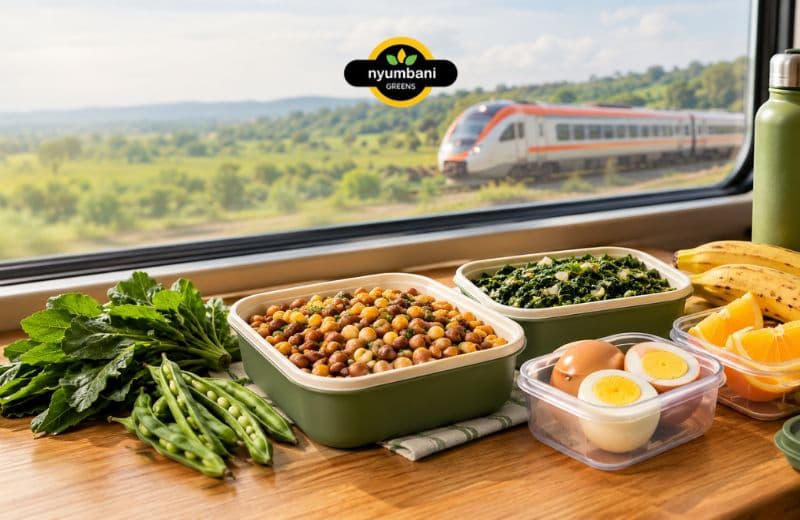
Githeri is one of the best travel meals in Kenya. Maize and beans give you steady energy and fibre, and the dish tastes fine warm or at room temperature. Pack it in a sealed container or an insulated food flask. Rosecoco beans work the same way if you prefer a beans-first meal, and they pair well with chapati.
Boiled arrowroot, sweet potatoes and cassava are starchy, filling and easy on the stomach. They are a good fit for children and older travellers.
Protein snacks
Boiled eggs are the easiest protein you can carry. Kienyeji eggs have a rich yolk many people enjoy, and if you want to know why, our guide to kienyeji egg benefits and nutrition explains the difference. Peel them at your seat rather than at home so they stay fresh.
Roasted groundnuts (njugu) give you protein and healthy fats in a tiny package. Fried fish is a good option for a longer bus trip if it stays in a cooler bag and is eaten within a few hours.
Fruit and light snacks
Bananas are gentle on the stomach and give quick energy. Tangerines and oranges add vitamin C and moisture, but peel them before you board to avoid sticky hands. Avocado with a pinch of salt makes a surprisingly good travel snack if you carry a small spoon.
Drinks
Water is the most important item in your bag. Dehydration feels a lot like tiredness and a headache, and it makes motion sickness worse. A flask of warm ginger or lemongrass tea is calming on a long road and helps settle the stomach after a heavy meal. Dried lemongrass powder weighs almost nothing, so it is easy to carry and brew anywhere there is hot water.
What to go easy on before and during the trip
Deep-fried snacks like samosas and chips can feel heavy and lead to nausea on winding roads. Sugary sodas and energy drinks give a quick spike followed by a crash, and they make you want to pee more often when you cannot stop easily. Very spicy food, strong smelling food, and large milk-based meals are also best left for after you arrive.
Eating a normal, balanced breakfast before you leave is usually better than travelling on an empty stomach or a heavy plate of oily food.
Travelling with children, elders or a sensitive stomach
Children get hungry often and get restless quickly, so pack small portions they can eat on their own. Boiled eggs, banana, soft chapati, cut fruit and a small water bottle work well. Avoid very sugary snacks, because they lead to energy swings and tantrums.
For older travellers, soft foods like boiled arrowroot, sweet potato, bananas and warm tea are easier to chew and digest. If you or a family member gets motion sickness, eat light, avoid greasy foods, sit near the front if you can, and sip water or ginger tea slowly.
How to keep travel food fresh and safe
Cook your food the night before or early in the morning, and let it cool slightly before sealing it, because trapped steam speeds up spoilage. Use a cooler bag with an ice pack for anything with protein, such as eggs, fish and cooked beans. Pack wet foods and dry foods separately so your chapati does not go soggy.
A good general rule is not to leave cooked food at warm temperatures for more than about two hours, and less in very hot weather like the coast or the Mombasa road. If you are unsure whether something is still safe, do not eat it.
Carry wet wipes or hand sanitiser, since you may be eating with your hands without access to water. A small bag for rubbish keeps the seat clean for everyone.
Simple packing plans you can copy
For a matatu ride of a few hours: two bananas, a handful of groundnuts, one boiled egg and a bottle of water.
For a long bus trip: a container of githeri, two boiled eggs, bananas, tangerines, groundnuts, chapati and a flask of tea.
For the SGR to Mombasa: a light breakfast before the terminus, boiled eggs, fruit, groundnuts and tea. Buy a hot drink onboard if you want one.
If you would rather not cook before an early departure, Nyumbani Greens delivers precooked traditional foods like githeri and fried fish across Kilimani, Kileleshwa, Lavington, Karen, Lang’ata, Westlands and South B. You can browse everything on our offerings page. For more ideas on carrying food for road journeys, see our guide to the best foods to carry for a long journey in Kenya.
Frequently asked questions
What is the best healthy food to carry in a matatu?
Bananas, boiled eggs, roasted groundnuts, tangerines and boiled arrowroot are the best choices. They are compact, filling, low in mess, and safe to eat without a fridge.
Can I carry my own food on the SGR?
Food has generally been allowed on board since Kenya Railways suspended its earlier ban, but alcohol is prohibited. Rules can change, so confirm the latest notice before you travel.
What can I eat on a long bus journey in Kenya without it spoiling?
Githeri, chapati, boiled arrowroot, sweet potatoes, groundnuts and fruit travel well for several hours. Keep eggs, fish and cooked beans in a cooler bag and eat them within about two hours.
What foods help with motion sickness on a bus or matatu?
Light foods like bananas, plain chapati, and boiled sweet potato are easier on the stomach. Ginger tea and small sips of water also help, while greasy and spicy foods can make nausea worse.
Is githeri good for travelling?
Yes. Githeri is filling, high in fibre and slow-burning energy, and it tastes good warm or at room temperature, which makes it very practical for long trips.
How much food should I carry for a 5 hour trip?
One small meal or two light snacks and plenty of water is enough for most people. Carry a little extra in case of traffic delays.
"Knowledge is the foundation of sustainable progress. By sharing insights and fostering understanding, we create a better future for agriculture and healthy living."