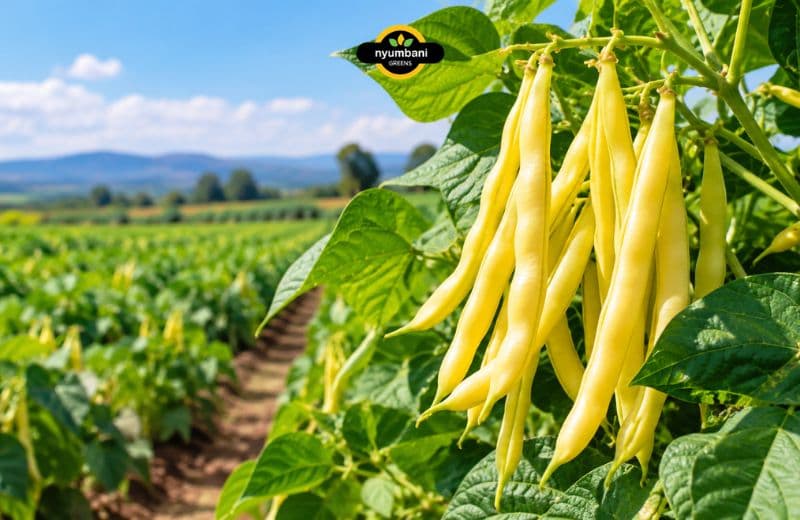
Yellow Beans Farming in Kenya: Yield Per Acre, Seed Rate, Maturity and Prices
Yellow beans have become one of the most talked-about legumes among Kenyan farmers over the past few years, and it's easy to see why. They mature fast, tolerate dry spells better than most common bean varieties, and command a steady price at the market because of demand from both households and institutional buyers like hotels, schools and hospitals. If you're weighing whether to put an acre under yellow beans this season, the numbers below will help you plan realistically rather than relying on the inflated figures you sometimes see in agrovet marketing.
What Are Yellow Beans
Kenyan Yellow beans are a bush-type variety of the common bean, Phaseolus vulgaris, named for the pale yellow to cream colour of the dry seed. They are grown widely across the Rift Valley, Central Kenya, and parts of Eastern Kenya, and are especially popular in counties like Nyeri, Nakuru, Meru and Nyandarua. In the market, yellow beans are often grouped alongside other well-known Kenyan varieties such as Rosecoco, Mwitemania, Nyayo and Mwezi Moja, though they're usually sold and priced as their own distinct category because of their mild flavour and quick cooking time.
Ideal Growing Conditions
Yellow beans do best in areas with well-drained loam soils and moderate, evenly distributed rainfall of around 300 to 400 millimetres during the growing season. They grow well at altitudes between 1,000 and 2,000 metres above sea level, which covers most of Kenya's major bean-growing zones. Like most beans, they're sensitive to waterlogging, so land preparation should focus on fine tilth and good drainage rather than heavy irrigation. Farmers in semi-arid areas often prefer yellow beans specifically because they tolerate moisture stress better than bulkier varieties like Rosecoco.
How Many Kgs of Yellow Beans to Plant Per Acre
This is one of the most searched questions, and the honest answer is that seed rate recommendations vary quite a bit depending on the source and the spacing used. Most agronomic guides and seed suppliers recommend planting with rows spaced 45 to 60 centimetres apart, and plants spaced 15 to 20 centimetres within the row, at a planting depth of about 3 to 5 centimetres.
At that spacing, seed requirements typically fall in the range of 8 to 15 kilograms per acre for most yellow bean seed lots, though some farmers who plant more densely or use lower germination seed report using up to 24 kilograms per acre to be safe. If you're using certified seed from a reputable source, stick closer to the lower end of that range, since germination rates are higher and you'll waste less seed. If you're using farm-saved seed of uncertain quality, budgeting a bit more seed per acre is a reasonable hedge.
How Long Yellow Beans Take to Mature
Yellow beans are known for their short growing cycle, which is part of why they've become popular with farmers who want to fit in two or even three planting cycles a year. Most varieties reach physiological maturity in 60 to 75 days, with some varieties taking up to 90 days depending on altitude and temperature. Cooler, higher altitude areas tend to push maturity toward the longer end of that range, while warmer lowland areas can see beans ready for harvest closer to the 60 day mark. This fast turnaround is one of the crop's biggest financial advantages, since it shortens the time between planting and getting paid.
Yellow Beans Production and Yield Per Acre in Kenya
Yield figures for yellow beans vary widely depending on who you ask, and it's worth understanding why. Some sources quote yields as low as 700 to 800 kilograms per acre, while others, particularly seed companies, advertise figures closer to 1,500 to 2,000 kilograms per acre or higher. The honest middle ground, based on farmer accounts and extension data, is that a well-managed acre of yellow beans under rainfed conditions typically produces between 8 and 15 bags of 90 kilograms each, which works out to roughly 700 to 1,400 kilograms per acre.
Farmers who invest in certified seed, apply fertiliser correctly, control pests and diseases promptly, and avoid intercropping with maize tend to land at the higher end of that range. Intercropping yellow beans with maize in particular is known to reduce both yield and seed quality, since the beans can develop a whitish discolouration when grown too close to taller crops. Irrigated production, or farms that manage soil moisture carefully during flowering and pod formation, can push yields towards 1,800 to 2,000 kilograms per acre, though this is closer to a best case scenario than an average one.
Yellow Beans Seed Prices in Kenya
Seed prices depend heavily on where you buy from. Farm-saved or locally sourced seed from fellow farmers or open-air markets tends to sell for around KES 100 to 150 per kilogram. Certified seed sold in packaged quantities through agrovets, on the other hand, is usually priced higher per kilogram, often in the range of KES 200 to 300 per kilogram, since the price reflects germination testing, disease screening and packaging.
For budgeting purposes, if you're planting 10 kilograms of certified seed per acre at an average price of KES 250 per kilogram, seed cost alone would come to around KES 2,500. Add fertiliser, herbicide and labour, and total production cost per acre for yellow beans is generally lower than for horticultural crops like cabbage or tomatoes, which is another reason the crop has attracted new farmers.
Market Prices and Profitability
Yellow beans typically fetch between KES 75 and 200 per kilogram at the farm gate or local market, with prices fluctuating based on season, region, and whether beans are sold fresh or dried. At an average yield of around 1,000 kilograms per acre and a conservative selling price of KES 100 per kilogram, an acre of yellow beans can generate gross revenue of roughly KES 100,000, against production costs that are often well under KES 30,000. That leaves a reasonable profit margin even before accounting for premium pricing that farmers who sell directly to hotels, hospitals or supermarkets, rather than through brokers, are sometimes able to negotiate.
Tips for Maximising Yellow Bean Yields
Timing your planting with the onset of reliable rains gives the crop the best start, since yellow beans are particularly sensitive to moisture stress during flowering and pod filling. Avoiding intercropping with maize protects both yield and seed colour. Sourcing seed from certified suppliers or organisations like the Kenya Agricultural and Livestock Research Organisation reduces the risk of poor germination and disease carryover. Scouting regularly for pests and fungal disease, and applying fertiliser based on a soil test rather than guesswork, are the practices that most consistently separate farmers getting 700 kilograms per acre from those getting closer to 1,500.
Frequently Asked Questions
What is the average yield of yellow beans per acre in Kenya?
Most well-managed farms harvest between 700 and 1,400 kilograms per acre, equivalent to roughly 8 to 15 bags of 90 kilograms, though yields can reach 1,800 to 2,000 kilograms under irrigation and intensive management.
How many kilograms of yellow bean seed do I need per acre?
Most guides recommend between 8 and 15 kilograms of seed per acre at standard spacing of 45 to 60 centimetres between rows and 15 to 20 centimetres between plants, though up to 24 kilograms is sometimes used with lower quality seed.
How long do yellow beans take to mature?
Yellow beans generally mature in 60 to 90 days from planting, with most varieties ready for harvest between 65 and 75 days.
How much do yellow bean seeds cost in Kenya?
Farm-saved seed typically costs KES 100 to 150 per kilogram, while certified seed from agrovets usually costs KES 200 to 300 per kilogram.
Is yellow bean farming profitable in Kenya?
Yes. With low production costs relative to yield value, an acre can generate gross revenue of around KES 100,000 or more, depending on market prices and yield achieved
"Knowledge is the foundation of sustainable progress. By sharing insights and fostering understanding, we create a better future for agriculture and healthy living."